If you are running IBM MQ (aka WebSphere MQ/MQSeries) on Linux then you should read the following ‘Flash Alert’ published by IBM:
http://www.ibm.com/support/docview.wss?uid=swg21602521
Regards,
Roger Lacroix
Capitalware Inc.
If you are running IBM MQ (aka WebSphere MQ/MQSeries) on Linux then you should read the following ‘Flash Alert’ published by IBM:
http://www.ibm.com/support/docview.wss?uid=swg21602521
Regards,
Roger Lacroix
Capitalware Inc.
Mozilla Firefox has just released Mozilla Firefox v37.0.
http://www.mozilla.com/firefox/
Mozilla Firefox is a free and open source web browser descended from the Mozilla Application Suite and managed by Mozilla Corporation. To display web pages, Firefox uses the Gecko layout engine, which implements most current web standards in addition to several features that are intended to anticipate likely additions to the standards
Regards,
Roger Lacroix
Capitalware Inc.
Capitalware Inc. would like to announce a new open source project called: Round Robin Messaging (RRM).
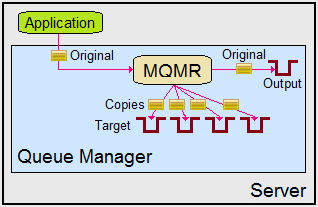
RRM is a MQ application that will move messages from a single input queue to ‘n’ output queues (‘n’ can be up to 99) in a round robin fashion.
RRM performs each MQGET and the subsequent MQPUT under a Unit of Work (UOW), so that message integrity is kept.
The RRM binaries/executables (32-bit & 64-bit) are available for all major platforms: AIX, HP-UX IA64, HP-UX RISC, IBM i (OS/400), Linux x86, Linux on POWER, Linux on System z (zSeries), Solaris SPARC, Solaris x86_64, Windows and z/OS.
RRM is licensed under Apache License 2. It is free to use but support is not included.
For more information about RRM, please go to:
https://www.capitalware.com/rrm_overview.html
Regards,
Roger Lacroix
Capitalware Inc.
Capitalware would like to announce that TxMQ is a Gold Sponsor of MQ Technical Conference v2.0.1.5 (MQTC).
For more information, please go to: http://www.mqtechconference.com
Regards,
Roger Lacroix
Capitalware Inc.
Capitalware Inc. would like to announce the official release of MQ Channel Throttler v1.0.0.
MQ Channel Throttler (MQCT) provides the ability to control/throttle the number of messages or bytes that flow over a channel. MQCT operates with IBM MQ (aka WebSphere MQ & MQSeries) v6.0, v7.0, v7.1, v7.5 and v8.0 in Windows, Unix, IBM i (OS/400) and Linux environments. It operates with Sender, Receiver, Server, Requester, Cluster-Sender, Cluster-Receiver, Server Connection and Client Connection channels of the WMQ queue managers.
MQCT is a simple drop-in solution that provides throttling for MQ queue managers. The throttling can be configured for queue manager to queue manager channels or for client application to queue manager channels.
The MQCT can be configured as a queue manager channel message exit or as a channel sender/receive exit.
On IBM i, Linux, Unix and Windows, MQCT can be configured and used with a non-default installation of WMQ in a multi-install MQ environment.
For more information about MQCT, please go to:
https://www.capitalware.com/mqct_overview.html
Regards,
Roger Lacroix
Capitalware Inc.
Capitalware is pleased to announce the release of Universal File Mover v1.2.0. It is a free open source project.
Universal File Mover is more than a simple tool to manage the transfer of files. It allows the user to combine business processes into a workflow. The user combines a series of Action commands to create the UFM Workflow XML file. UFM is supported on AIX, HP-UX, IBM i (OS/400), Linux, Mac OS X, Solaris and Windows.
For more information on Universal File Mover, please go to:
https://www.capitalware.com/ufm_overview.html
Note: When upgrading UFM from an ealier release, please remember to deploy the receiver side first because the MQSend action defaults to use MQ properties. There is a new MQSend attribute called ‘usev7prop’. It defaults to ‘Y’. The user can set the ‘usev7prop’ attribute to ‘N’ and it will use the old style handling for the Remote FileName and Directory.
Regards,
Roger Lacroix
Capitalware Inc.
To stimulate sales of MQ Standard Security Exit for z/OS (z/MQSSX), Capitalware has decided to slash the price of z/MQSSX.
As of today, z/MQSSX will be priced at $999.00 USD per z/OS queue manager plus 15% Yearly Maintenance Fee down from the original price of $2490.00 USD (plus 15%).
Also, the price for the ‘Enterprise License for z/MQSSX‘ has been reduced to $15,000.00 USD plus 15% Yearly Maintenance Fee down from $45,000 USD (plus 15%). An enterprise license allows a company to have unlimited number of z/OS queue managers use z/MQSSX at an unlimited number of locations.
The new pricing for z/MQSSX is NOT a sale price but rather a permanent price change (reduction).
Capitalware offers free 60-day (or 90-day) trials of z/MQSSX. If you would like to try out z/MQSSX then send an email to support@capitalware.com and we will get you started on your trial of z/MQSSX (absolutely no strings attached).
Note: Existing customers of z/MQSSX will have their Yearly Maintenance Fee reduced to the new fee structure.
Regards,
Roger Lacroix
Capitalware Inc.
The last 3-4 weeks have been an interesting and painful, ‘beat your head against the wall’ type of developer nightmare.
A customer was getting some very strange behavior with Universal File Mover (UFM) setting the Correlation Id of a message when running as a Windows service.
When UFM is watching a directory for files to appear, UFM will launch a different thread, for each file found, and each thread will uploaded the ‘found file’ to MQ. At any given instances, there could be 5, 10, 20, etc. threads running and all will be uploading their particular file to MQ (on separate MQ connections).
In the log, I could see many threads setting the Correlation Id (different values per thread) at the same time (same timestamp) but the receiving side’s message would have the same Correlation Id (when it should be different).
I changed JVMs as I thought I had a JVM issue, it did not help. I checked for static variables/methods – nothing found. I synchronized the methods, etc. to make sure nothing was shared between the threads. The only thing that did not change was MQ (v7.5.0.3) and I have a feeling that somewhere in MQMessage or related class there is a static field. This issue was easy to reproduce (only on MQ v7.5.0.3), as soon as more than 4 threads (with separate MQ connections) tried to put messages, at the same time, the Correlation Id got messed up (same value for each message). No other field or data would be altered/duplicated. Very weird to say the least.
Anyway, I got fed up and figured I would switch UFM to use MQ Properties to get around the Correlation Id issue. There are lots of people using UFM to send and receive files via MQ (using many different MQ versions), it just so happens that something weird happens on MQ v7.5.0.3 with UFM v1.1.0.
I updated UFM and tested it on a couple of servers and everything looked good and so I gave the update to the customer. The customer sent me the logfile and said they were getting Reason Code of 2142 (MQRC_HEADER_ERROR). I wasted over a day trying to figure out how RC of 2142 related to setting MQ Properties. It doesn’t. It is a totally incorrect/invalid Reason Code for the error.
Through trial and error, I realized that the CLASSPATH was missing the ‘com.ibm.mq.pcf.jar’ JAR file. A PMR was opened with IBM and I am trying to get them to fix the exception but they said it is a configuration issue and there is no defect. I happily admit that I did not include the MQ PCF jar file and it was my mistake but MQ should be returning ‘java.lang.NoClassDefFoundError: com/ibm/mq/pcf/***’ (where *** is the class it was looking for). So far, IBM is sticking with there ‘user configuration error and there is no defect in MQ’.
The Windows service I use for the JVM must know about all JAR files because it builds and loads everything internally. Hence, the reason the missing MQ PCF JAR file. I have updated the Windows service and UFM is now flying and the customer is happy.
In this discussion with various people on the web, it has become apparent that IBM has made a total mess of the CMQC class and totally confuses most Java developers. There are 4 CMQC classes and 3 of the 4 of them are deprecated.
Developers should only be using ‘com.ibm.mq.constants.CMQC’ class.
Also, IBM deprecated ‘com.ibm.mq.MQC’ class in MQ v7.0.0.0 then undeprecated it. Seriously. See the tech note: https://www-01.ibm.com/support/docview.wss?uid=swg21423244. About 2/3 of the fields in MQC class are deprecated (after the flip, flop).
Finally, some developers prefer to use the ‘com.ibm.mq.constants.MQConstants’ class rather than the
‘com.ibm.mq.constants.CMQC’ class. That is fine but please note that the MQConstants class is much, much larger than the CMQC class.
Regards,
Roger Lacroix
Capitalware Inc.
Capitalware would like to announce that Nastel Technologies is a Platinum Sponsor of MQ Technical Conference v2.0.1.5 (MQTC).
For more information, please go to: http://www.mqtechconference.com
Regards,
Roger Lacroix
Capitalware Inc.
And now for something completely different. 🙂
As some of you know, my wife and I have 5 kids. The reason we moved to London, Ontario is so that our kids could go to University of Western Ontario (aka Western) and live at home. Richard (son #1) is in 2nd year Engineering and Tyler (son #2) is in 1st year Engineering.
Richard is taking an ‘Engineering Communications’ course (ES2211) and he had to write an essay with the subject of a ‘process’. So he decided to write about time travel. I read it and thought it was pretty interesting and I thought other geeks might be interested in it.
So, here’s Richard’s essay called: How Time Travelling Theoretically Works, enjoy. 🙂
Regards,
Roger Lacroix
Capitalware Inc.